
NEETPGAI
FeaturesBlogComparePricing
Log inStart Free
NEETPGAI

AI-powered NEET PG preparation platform. Master all 19 subjects with adaptive MCQs, AI tutoring, and spaced repetition.

Product

  • Features
  • Subjects
  • Previous Year Questions
  • Compare
  • Pricing
  • Blog

Features

  • Adaptive MCQ Practice
  • AI Tutor
  • Mock Tests
  • Spaced Repetition

Resources

  • Blog
  • Study Guides
  • NEET PG Updates
  • Contact & support

Legal

  • Privacy Policy
  • Terms of Service

Stay updated

© 2026 NEETPGAI. All rights reserved.
    PYQs/2021/Q118
    Verified answer (AI cross-checked + SME reviewed)

    Q118 (2021, Cardiology) — Correct answer: C. Coarctation of aorta.
    NEET PG 2021
    Q118
    stethoscope Medicine
    Cardiology
    tier-2 (3/3 verifier agreement)
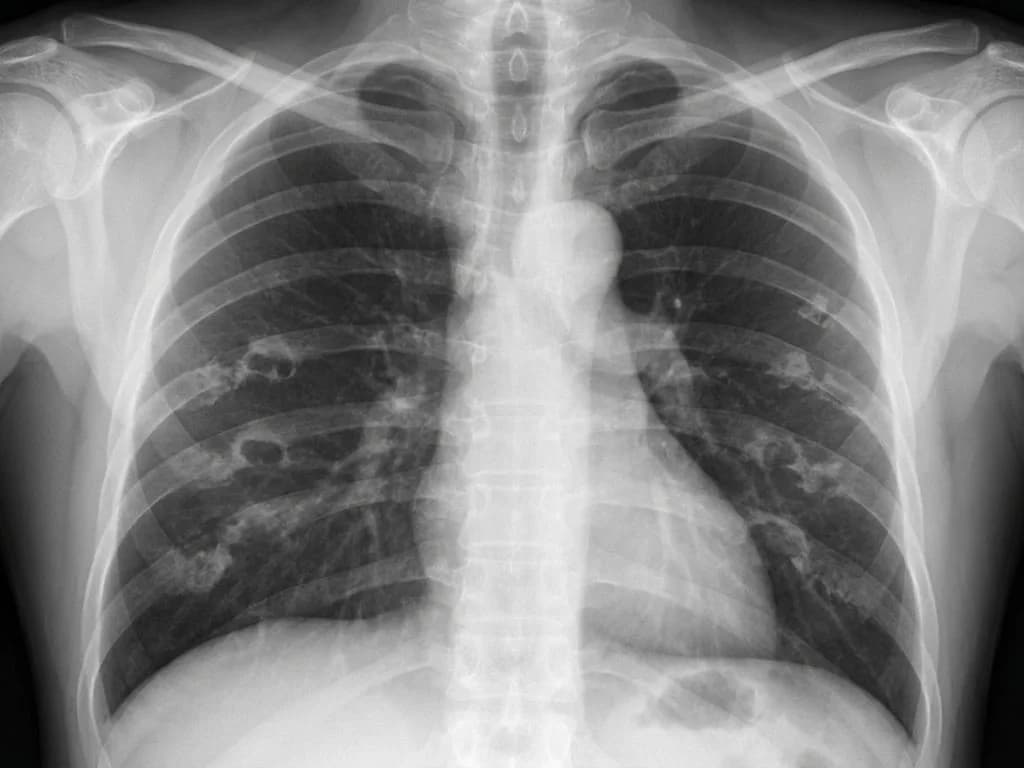
    Clinical image for NEET PG 2021 Q118

    A male patient had feeble femoral pulses with upper-limb blood pressure of 186/90 mmHg. Chest x-ray showed enlarged intercostal arteries. What is the likely diagnosis?

    A. Atrial septal defect
    B. Bicuspid aortic valve
    C. Coarctation of aorta
    D. Patent ductus arteriosus

    Correct Answer: C. Coarctation of aorta

    Coarctation of the aorta is a congenital narrowing of the descending thoracic aorta, classically presenting with the triad of feeble/absent femoral pulses, hypertension in upper limbs, and enlarged intercostal arteries. The narrowing proximal to the coarctation causes increased afterload and compensatory hypertension in the upper body (186/90 mmHg here). Distal to the narrowing, blood pressure and pulses are diminished—hence the feeble femoral pulses. The body develops collateral circulation through intercostal, internal mammary, and other systemic arteries to bypass the narrowed segment, causing them to enlarge visibly on chest X-ray. This is a hallmark radiological finding. The differential diagnosis includes other cyanotic and acyanotic congenital heart defects, but only coarctation produces this specific combination of upper-limb hypertension with lower-limb hypotension and radiological evidence of intercostal artery enlargement. Indian guidelines (IAP cardiology) recognize coarctation as a key cause of secondary hypertension in children and young adults presenting with weak lower-limb pulses.

    Why the other options are wrong

    A. Atrial septal defect — ASD is a left-to-right shunt causing pulmonary overcirculation and right heart volume overload. It does NOT cause upper-limb hypertension or diminished femoral pulses. Patients typically present with dyspnea and atrial arrhythmias, not the pulse differential seen here. Intercostal artery enlargement is not a feature of ASD. B. Bicuspid aortic valve — Bicuspid aortic valve causes aortic stenosis or regurgitation depending on the degree of valve dysfunction. While it may cause systemic hypertension, it does NOT produce feeble femoral pulses or the characteristic pulse differential between upper and lower limbs. Intercostal artery enlargement is not associated with this lesion. D. Patent ductus arteriosus — PDA is a left-to-right shunt causing a continuous 'machinery' murmur and wide pulse pressure (bounding pulses). It does NOT cause upper-limb hypertension with lower-limb hypotension or feeble femoral pulses. The clinical presentation and hemodynamics are entirely different from the case described.

    High-Yield Facts

    • Coarctation triad: feeble femoral pulses + upper-limb hypertension + intercostal artery enlargement on CXR.
    • Pulse differential: upper-limb BP significantly higher than lower-limb BP; femoral pulse delay (radio-femoral delay) is a classic sign.
    • Collateral circulation: intercostal, internal mammary, and epigastric arteries enlarge to bypass the narrowed aortic segment.
    • Associated findings: bicuspid aortic valve (85% of cases), Turner syndrome, hypoplastic left heart, and increased risk of aortic rupture if untreated.
    • Management: surgical repair (end-to-end anastomosis or graft) or percutaneous balloon angioplasty/stenting in selected cases; lifelong follow-up for hypertension.

    Mnemonics

    COA (Coarctation Of Aorta) = Collateral Circulation Collateral arteries enlarge (intercostal) → Older children/young adults with Arterial hypertension (upper limbs) + Absent/feeble femoral pulses. Use this when you see intercostal enlargement on CXR. FEEBLE FEMORAL = Coarctation Feeble femoral pulses + Enlarged intercostal arteries + Elevated upper BP = Bicuspid aortic valve association + Lower-limb hypotension + E = Coarctation. Quick recall for the pulse differential sign.

    NBE Trap

    NBE may pair coarctation with other congenital heart defects (especially ASD or PDA) to test whether students confuse left-to-right shunts with obstructive lesions. The key discriminator is the pulse differential and intercostal enlargement, which are unique to coarctation.

    Clinical Pearl

    In Indian pediatric practice, coarctation is often missed in young patients presenting with "hypertension" alone. Always check femoral pulses and compare upper-limb BP with lower-limb BP in any child with unexplained hypertension—a radio-femoral delay or absent femoral pulse is the bedside clue that should trigger echocardiography and CT angiography for confirmation.

    _Reference: Harrison Ch. 282 (Congenital Heart Disease); Robbins Ch. 12 (Congenital Heart Disease); OP Ghai Ch. 7 (Cardiology)_

    Ask AI Tutor about this question

    Stuck on a distractor? Want a worked-through clinical scenario? The AI Tutor is a NEETPGAI Pro feature — sign up free to practice the full question bank, then unlock the AI Tutor when you're ready.

    Explain this concept in plain language
    Why is each wrong option wrong?
    Give me a clinical scenario where this is tested
    Sign up free Already have an account? Log in

    Free to start, no credit card required. The 3 prompts/day quota is shared with practice + tutor + deep-dive across NEETPGAI.

    Memory-based reconstruction

    NBE does not officially release NEET PG papers per the 2025 Supreme Court directive. This question was reconstructed from 1 community source: PrepLadder NEET PG 2021 Recall PDF. Cross-verified by Claude Haiku 4.5 + Gemini 2.5 Flash + community-aggregate vote, then reviewed by a practising medical SME.

    ← All NEET PG 2021 questionsPractice with AI Tutor →