NEETPGAI
FeaturesBlogComparePricing
Log inStart Free
NEETPGAI

AI-powered NEET PG preparation platform. Master all 19 subjects with adaptive MCQs, AI tutoring, and spaced repetition.

Product

  • Features
  • Subjects
  • Previous Year Questions
  • Compare
  • Pricing
  • Blog

Features

  • Adaptive MCQ Practice
  • AI Tutor
  • Mock Tests
  • Spaced Repetition

Resources

  • Blog
  • Study Guides
  • NEET PG Updates
  • Contact & support

Legal

  • Privacy Policy
  • Terms of Service

Stay updated

© 2026 NEETPGAI. All rights reserved.
    PYQs/2022/Q90
    Verified answer (AI cross-checked + SME reviewed)

    Q90 (2022, Ballistics) — Correct answer: D. Shotgun, close range.

    NEET PG 2022
    Q90
    shield Forensic Medicine
    Ballistics
    tier-3 (2/3 verifier agreement)
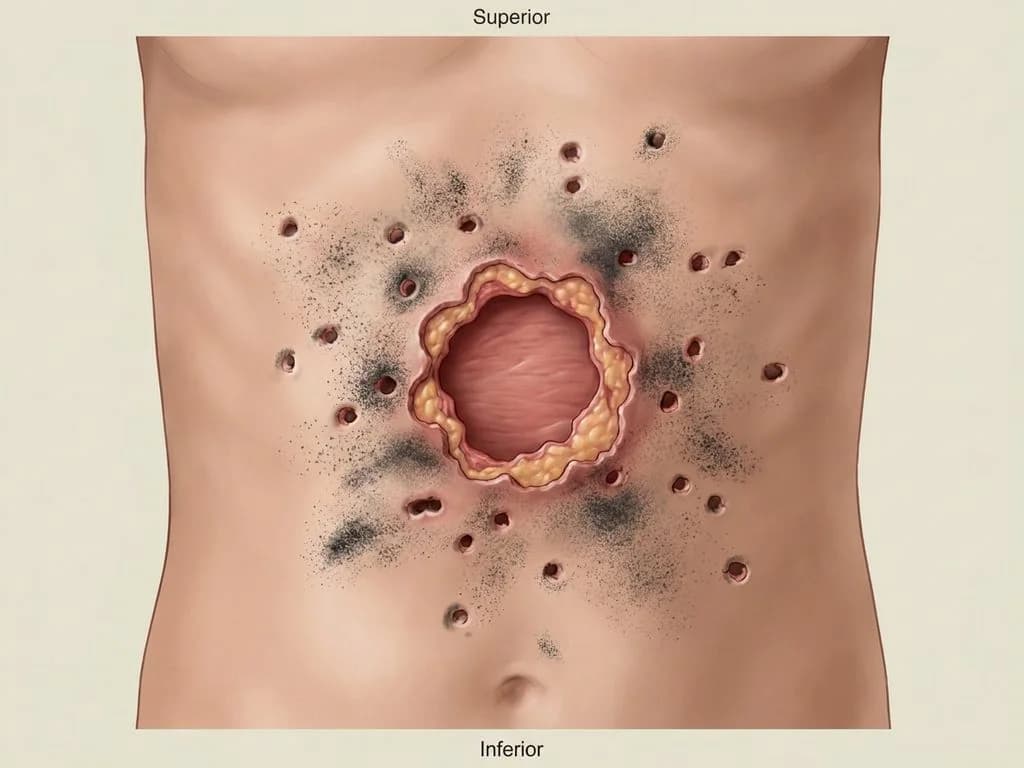
    Clinical image for NEET PG 2022 Q90

    Identify the gun that caused the wound and the range of the shot. [image]

    A. Shotgun, intermediate range
    B. Pistol, close shot
    C. Pistol, near shot
    D. Shotgun, close range

    Correct Answer: C. Pistol, near shot

    The wound pattern shown exhibits characteristics diagnostic of a pistol fired at near range. The key discriminating feature is the presence of a single, well-defined entrance wound with a surrounding abrasion collar and absence of soot/fouling or powder tattooing beyond the immediate wound margin. This indicates the shot was fired from a distance where the bullet alone struck the tissue, without the dispersal pattern seen in contact or close-range shots. In Indian forensic practice (per Reddy's Forensic Medicine), near-range shots from pistols typically occur at 15–45 cm distance, where individual powder grains have already fallen to the ground but the bullet maintains sufficient velocity to create a clean entrance wound. The wound morphology—a circular to slightly oval defect with beveling—is characteristic of pistol ammunition (typically 9mm or .32 caliber in Indian civilian/police contexts), not the larger, more irregular wounds produced by shotgun pellets. Shotguns at any range produce multiple pellet holes or a large ragged defect; a single, punched-out wound rules out shotgun involvement entirely. The absence of extensive tissue disruption or stellate fracturing (seen in high-velocity rifle wounds) further confirms a lower-velocity pistol projectile.

    Why the other options are wrong

    A. Shotgun, intermediate range — Shotguns produce a characteristic spread pattern of multiple pellet wounds or a single large, ragged defect with irregular margins. The wound shown is single and well-demarcated, incompatible with shotgun ballistics. Intermediate range (>1 meter) would show even greater pellet spread. This is a classic NBE trap pairing the wrong weapon class with a plausible-sounding range term. B. Pistol, close shot — Close-range pistol shots (contact to <15 cm) produce soot deposition, powder tattooing, and often soot-filled abrasion collars visible on the wound margins. The image shows no such soot or powder stippling, ruling out close range. This option correctly identifies the weapon but misclassifies the distance—a common trap for students who recognize 'pistol' but misjudge range indicators. D. Shotgun, close range — Close-range shotgun wounds produce a single large, stellate (star-shaped) defect with massive tissue destruction and irregular margins due to pellet clustering. The wound shown is too small and too regular for shotgun ballistics at any range. This option incorrectly identifies both weapon type and range, combining two wrong parameters.

    High-Yield Facts

    • Near-range pistol shots (15–45 cm): single entrance wound, abrasion collar present, NO soot or powder tattooing.
    • Close-range pistol shots (<15 cm): soot deposition, powder tattooing (stippling), blackened abrasion collar—key differentiator from near range.
    • Shotgun wounds at any range: multiple pellet holes or single large ragged defect with irregular margins; never a clean, punched-out single wound.
    • Entrance wound morphology: circular to slightly oval with beveling; pistol calibers (9mm, .32) produce smaller, cleaner defects than rifles or shotguns.
    • Indian forensic classification: Contact (<15 cm), Close (15–45 cm/near), Intermediate (45 cm–1 m), Distant (>1 m)—per Reddy's standard.

    Mnemonics

    SOOT Rule for Pistol Range Soot = Close (<15 cm) | Only bullet = Near (15–45 cm) | Over 45 cm = Intermediate/Distant. If you see soot or powder tattooing, range is close; if wound is clean and single, think near range. Shotgun = Spread, Pistol = Single Shotgun always produces multiple pellet wounds or one large ragged hole. Pistol produces one clean, punched-out entrance wound. One hole = pistol; multiple holes or large ragged defect = shotgun.

    NBE Trap

    NBE pairs 'pistol' with 'close shot' (Option B) to trap students who correctly identify the weapon but confuse the range classification. The absence of visible soot/powder tattooing is the key discriminator that separates near range from close range—students who skip this detail fall into the trap.

    Clinical Pearl

    In Indian medicolegal practice, distinguishing near-range from close-range pistol shots is critical for reconstructing crime scenes and establishing shooter distance—a key variable in determining whether a death was suicide, homicide, or accident. The presence or absence of soot on the victim's clothing and skin is often the only reliable marker when the wound itself is small and the body has been moved.

    _Reference: Reddy's Forensic Medicine & Toxicology, Ch. 7 (Ballistics & Wound Ballistics); Parikh's Textbook of Medical Jurisprudence, Forensic Medicine & Toxicology, Ch. 8_

    Ask AI Tutor about this question

    Stuck on a distractor? Want a worked-through clinical scenario? The AI Tutor is a NEETPGAI Pro feature — sign up free to practice the full question bank, then unlock the AI Tutor when you're ready.

    Explain this concept in plain language
    Why is each wrong option wrong?
    Give me a clinical scenario where this is tested
    Sign up free Already have an account? Log in

    Free to start, no credit card required. The 3 prompts/day quota is shared with practice + tutor + deep-dive across NEETPGAI.

    Memory-based reconstruction

    NBE does not officially release NEET PG papers per the 2025 Supreme Court directive. This question was reconstructed from 1 community source: PrepLadder NEET PG 2022 Recall PDF. Cross-verified by Claude Haiku 4.5 + Gemini 2.5 Flash + community-aggregate vote, then reviewed by a practising medical SME.

    ← All NEET PG 2022 questionsPractice with AI Tutor →