
Free practice + topic-wise study material with AI explanations.
Build conceptual clarity. Focus on Pathology, Pharmacology, and PSM.
Quick answer
Microbiology in NEET PG 2027 spans 72 topics across 9 body systems and accounts for roughly 10% of the paper — translating to approximately 16–20 questions in the 180-question NEET PG 2027 paper. The subject tests three distinct cognitive layers: (1) pure recall of microbiological facts (e.g., the selective medium for Vibrio cholerae is TCBS agar), (2) laboratory interpretation (e.g., recognising that oxidase-positive, curved gram-negative rods on Campy food agar point to Campylobacter jejuni), and (3) clinical decision-making (e.g., choosing clindamycin or linezolid over penicillin in a patient with documented anaphylaxis who has streptococcal toxic shock syndrome). Questions increasingly arrive as 4–6-line clinical vignettes, not one-liners.
Microbiology is the backbone of rational antibiotic prescribing, infection control, and public health — all of which appear in Medicine, Surgery, and Community Medicine papers as well. Understanding the virulence factors of Staphylococcus aureus (protein A, coagulase, TSST-1) directly informs how you answer a Medicine question on toxic shock syndrome. The pathogenesis of Corynebacterium diphtheriae — exotoxin-mediated inhibition of EF-2 via ADP-ribosylation — is tested both in Microbiology and in Paediatrics vignettes. Recognising Candida albicans as the dominant cause of oesophageal candidiasis in HIV patients with CD4 counts below 100 cells/µL is a cross-cutting fact that appears in Medicine, Microbiology, and Pharmacology contexts.
The 72-topic syllabus divides broadly into General Microbiology (bacterial structure, staining, culture, sterilisation — roughly 20% of Microbiology questions), Systematic Bacteriology (the largest chunk, ~50%), Virology (~15%), and Mycology + Parasitology (~15%). The top 12 high-yield topics listed for NEET PG 2027 are all bacteriology-heavy, which reflects the historical PYQ distribution. Gram stain technique and interpretation, culture media, and sterilisation/disinfection are "free marks" topics — they are conceptually straightforward and appear almost every year.
Many aspirants treat Microbiology as a pure memorisation subject and neglect the "why" behind laboratory findings, which is exactly what NEET PG 2027 vignettes exploit. A second common error is confusing selective media (inhibit non-target organisms) with differential media (distinguish organisms by colour/reaction) — MacConkey agar is both, while Lowenstein-Jensen is selective only. A third misconception is that virology and mycology are low-yield; while individually smaller, together they contribute 5–7 questions, and topics like HIV staging, Candida species identification, and Hepatitis serology markers are perennial favourites. Do not skip them in the final two months.
200 textbook-style one-liners auto-extracted from approved Microbiology MCQ explanations. Drop your email and we'll send the PDF — no spam, you can reply to unsubscribe.
These 12 topics historically carry a disproportionate share of Microbiology questions on NEET PG. Tap any to start practising — the Microbiology filter is pre-selected for you.
General Microbiology
Bacterial Structure and Staining
Start practising
General Microbiology
Culture Media and Growth
Start practising
General Microbiology
Sterilisation and Disinfection
Start practising
General Microbiology
Gram Stain — Technique and Interpretation
Start practising
Gram-Positive Bacteriology
Staphylococcus aureus
Start practising
Gram-Positive Bacteriology
Streptococcus pyogenes
Start practising
Gram-Positive Bacteriology
Streptococcus pneumoniae
Start practising
Gram-Positive Bacteriology
Corynebacterium diphtheriae
Start practising
Gram-Positive Bacteriology
Clostridium Species and Toxins
Start practising
Gram-Negative Bacteriology
E. coli and Enterobacteriaceae
Start practising
Gram-Negative Bacteriology
Salmonella — Enteric Fever
Start practising
Gram-Negative Bacteriology
Shigella
Start practising
Five repeatable tactics that NEET PG toppers consistently use for Microbiology. Below: a deeper play-by-play.
Build a strong foundation
Read each high-yield topic from one standard textbook before opening any question bank.
Practice in tight loops
After every chapter, attempt 20–30 topic-tagged MCQs while the concepts are still fresh.
Schedule spaced reviews
Push wrong answers into SM-2 review queues — short, frequent, expanding intervals beat marathon revisions.
Mine the last 5 years of PYQs
Map every PYQ to its parent topic. Recurring themes are louder signal than weightage tables.
Stress-test with mock tests
A subject-wise mock every fortnight surfaces blind spots before the real exam does.
Tier 1 — Do first, revise most often:
Tier 2 — Cover in week 3–4:
Tier 3 — Revise in the last 3 weeks only:
Put this into a 30-minute session today
We'll pre-select Microbiology and serve a mixed difficulty set.
A patient is found to be HBsAg-positive and anti-HBc IgM-negative. What is the most likely interpretation?
See the options, answer & explanation
The full question — answer choices, correct answer, and AI explanation — is free the moment you sign in.
4 in-depth Microbiology guides curated for NEET PG aspirants.
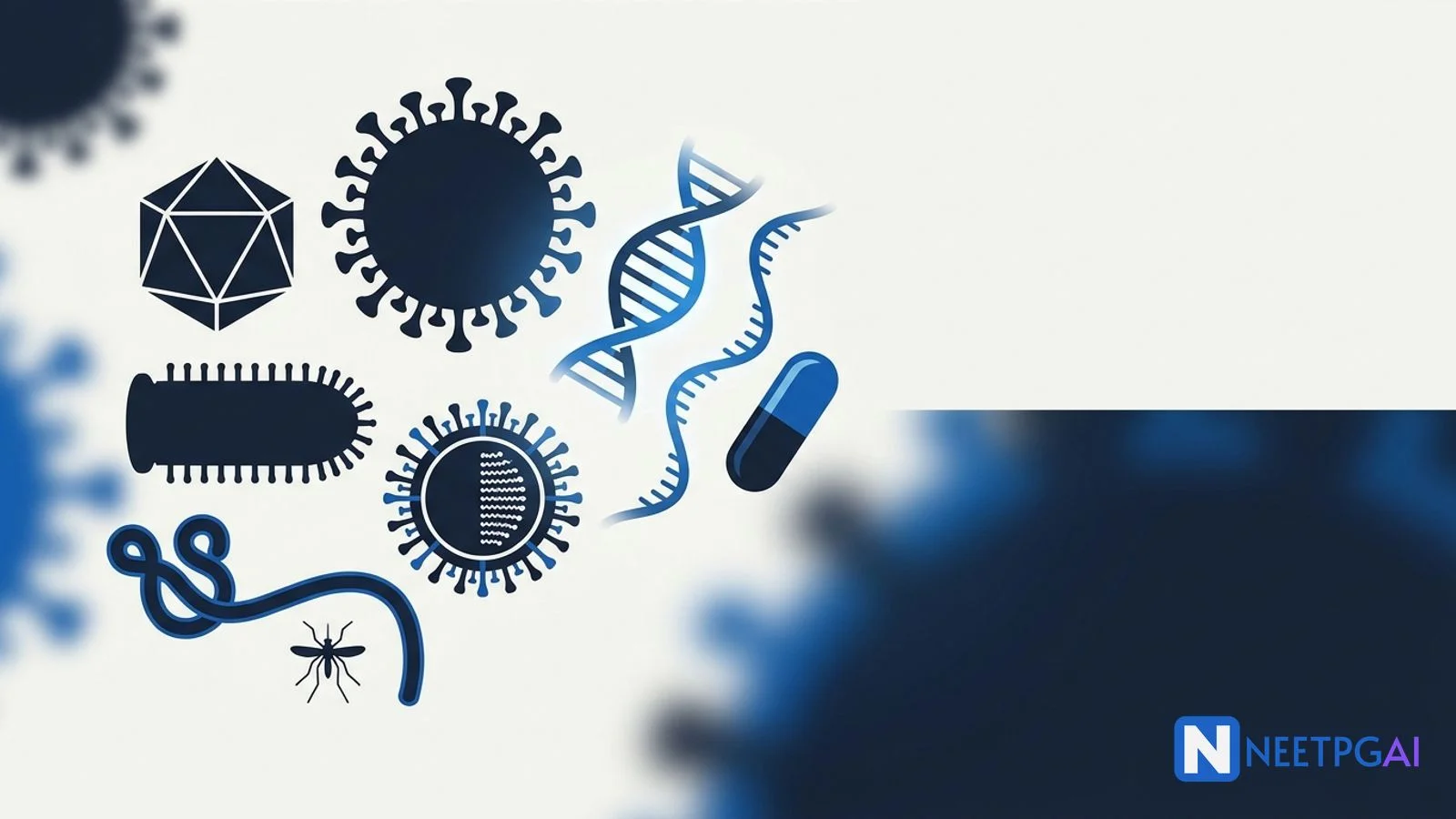
Master DNA and RNA viruses, oncogenic viruses, latency, antivirals, dengue, HIV, hepatitis and COVID-19 for NEET PG 2027 with India-specific exam traps and tables.
Read more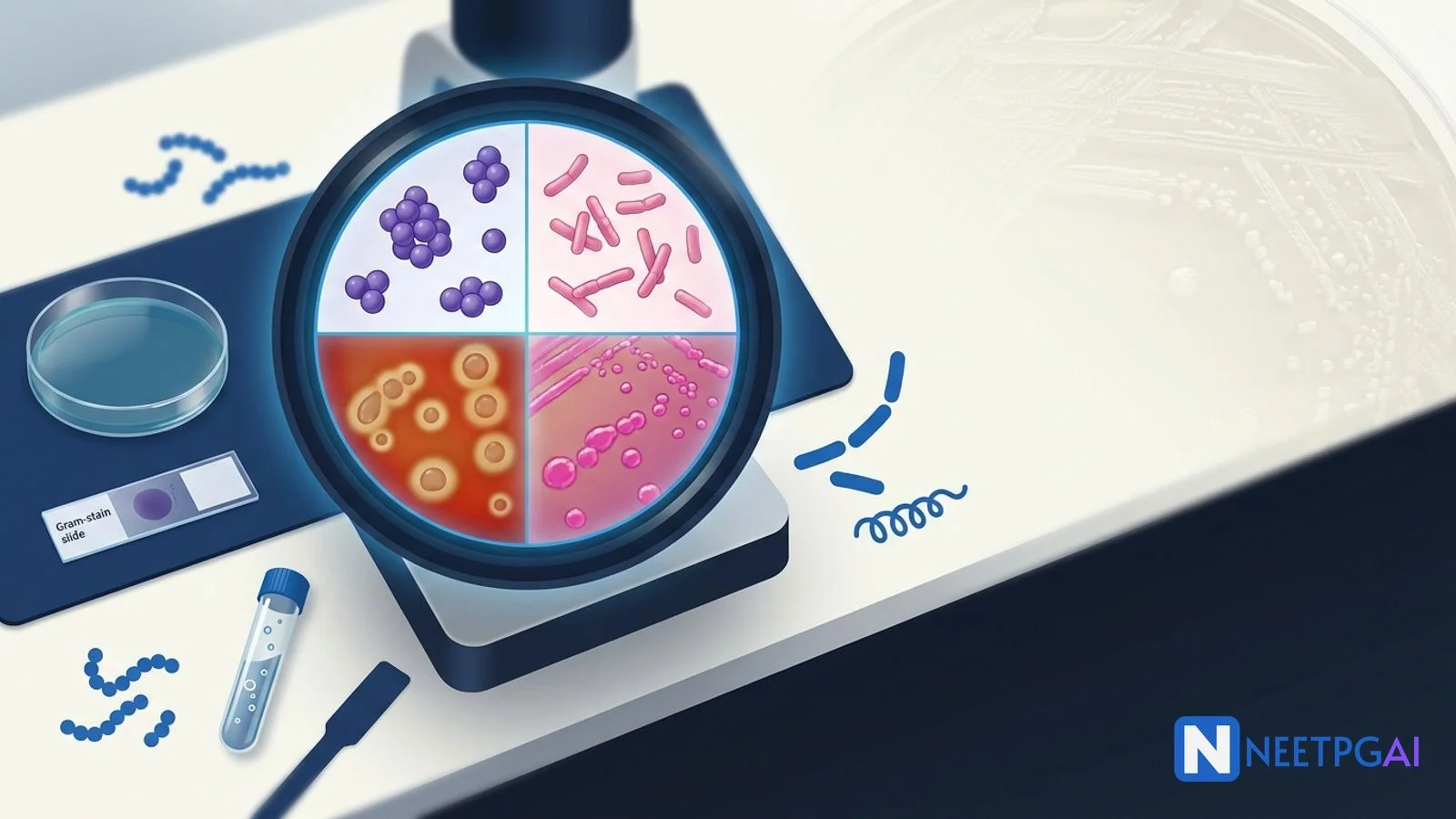
Master Gram-positive, Gram-negative, atypical, and zoonotic bacteria for NEET PG 2027 — identification tests, virulence factors, key MCQ traps and India-specific stems.
Read more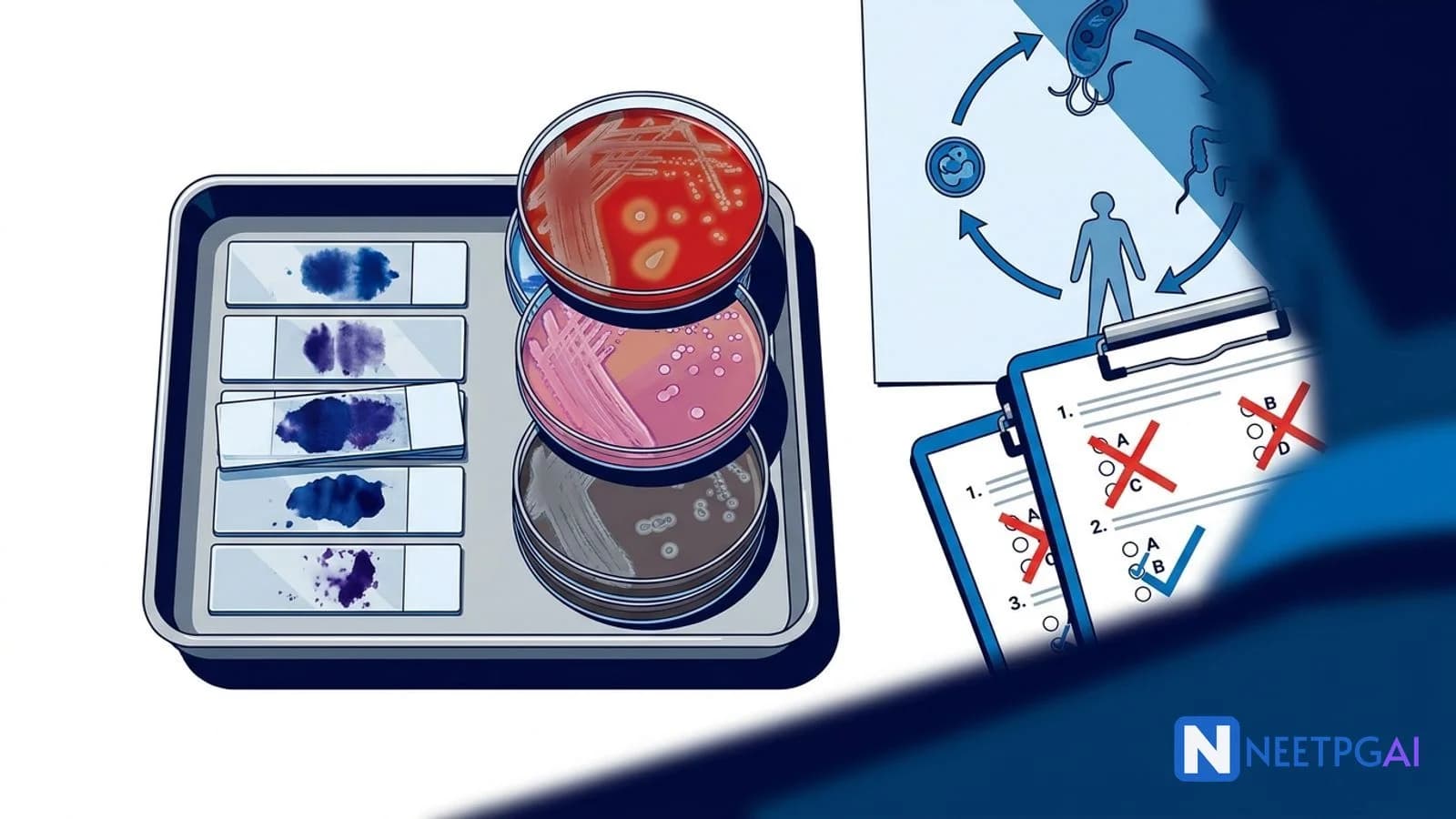
Avoid the 10 costliest microbiology mistakes in NEET PG 2027: confused gram stain morphology, mixed-up Staph and Strep species, wrong culture media, hepatitis serology traps, parasite lifecycle confusion, antibiotic class mechanisms, dimorphic fungi, virology test selection, bacterial toxin types, and vaccine classification.
Read moreTrained on standard textbooks (Harrison's, Robbins, KD Tripathi, BD Chaurasia, Bailey & Love). Drop your email for a one-tap link to your free account — the full 28,000+ MCQ bank, real previous-year questions, mock tests, revision and analytics, at no cost. The AI Tutor is part of Pro.
AI-first preparation built specifically for the NEET PG question pattern.
Every Microbiology MCQ comes with a detailed Claude-authored explanation citing standard references (Harrison's, Bailey & Love, Robbins, Park's etc.) — never a one-line answer key.
Wrong answers auto-schedule for review at expanding intervals (1d → 3d → 7d → 21d). Most aspirants need only half the practice volume to retain the same recall.
Every Microbiology question is generated against the NMC syllabus and validated against the last 5 years of NEET PG / INI-CET previous year questions.
Stuck on a tricky topic? Ask the AI Tutor anytime — it answers in seconds with diagrams, mnemonics, and clinical pearls tailored to NEET PG.
Ready to test yourself?
Test your Microbiology knowledge with AI-powered MCQs and detailed explanations — no signup required to try.
Common questions from NEET PG aspirants preparing Microbiology.
Sign up free and practice all 2009+ MCQs with AI-powered explanations tailored to your performance.
Create Free Account