
Free practice + topic-wise study material with AI explanations.
Build conceptual clarity. Focus on Pathology, Pharmacology, and PSM.
Quick answer
OBG in NEET PG 2027 tests your ability to apply obstetric and gynecological principles to clinical vignettes — not recall isolated facts. A typical question gives you a gestational age, a set of vitals or investigation results, and asks you to pick the next best step or identify the diagnosis. The subject spans 54 topics across 9 body systems in the NMC syllabus, and at 15% weightage it contributes more questions per subject than most surgical specialties.
The subject intersects directly with your MBBS internship postings. Managing a patient with severe pre-eclampsia at 34 weeks, interpreting a partograph that shows secondary arrest, or counselling a GDM patient about postpartum diabetes risk — these are scenarios you have seen on the ward, and NEET PG 2027 will present them as 4-option single-best-answer stems. The clinical grounding you built during your obstetrics and gynecology posting is your biggest asset here.
The syllabus divides broadly into Obstetrics (antenatal care, medical disorders in pregnancy, labor and its complications, operative obstetrics) and Gynecology (menstrual disorders, endometriosis, PCOS, infertility, gynecological oncology, contraception). Obstetrics carries the heavier exam load — roughly 60–65% of OBG questions in recent papers — so topics like Rh isoimmunisation, APH, and Cesarean Section indications deserve more time than, say, vulval carcinoma staging.
A common misconception is that OBG is a "memory subject." It is not. Questions on GDM, for instance, test whether you know that macrosomia is a fetal complication but neural tube defects are not specifically linked to GDM (unlike pre-gestational diabetes with poor periconceptional control). Similarly, students often confuse the management thresholds for placenta previa grades or misremember the Kleihauer-Betke test indication in Rh isoimmunisation. Conceptual clarity on these distinctions is what separates a 60-percentile from an 85-percentile performance in OBG.
200 textbook-style one-liners auto-extracted from approved OBG MCQ explanations. Drop your email and we'll send the PDF — no spam, you can reply to unsubscribe.
These 12 topics historically carry a disproportionate share of OBG questions on NEET PG. Tap any to start practising — the OBG filter is pre-selected for you.
Normal Pregnancy and Antenatal Care
Diagnosis of Pregnancy and Dating
Start practising
Normal Pregnancy and Antenatal Care
Antenatal Visits and Investigations
Start practising
High-Risk Pregnancy
Pregnancy-Induced Hypertension
Start practising
High-Risk Pregnancy
Gestational Diabetes
Start practising
High-Risk Pregnancy
Rh Isoimmunisation
Start practising
High-Risk Pregnancy
APH — Placenta Previa
Start practising
High-Risk Pregnancy
APH — Abruptio Placentae
Start practising
High-Risk Pregnancy
Preterm Labor
Start practising
High-Risk Pregnancy
IUGR — Diagnosis and Management
Start practising
Labor and Delivery
Stages of Labor
Start practising
Labor and Delivery
Partograph
Start practising
Labor and Delivery
Cesarean Section Indications
Start practising
Five repeatable tactics that NEET PG toppers consistently use for OBG. Below: a deeper play-by-play.
Build a strong foundation
Read each high-yield topic from one standard textbook before opening any question bank.
Practice in tight loops
After every chapter, attempt 20–30 topic-tagged MCQs while the concepts are still fresh.
Schedule spaced reviews
Push wrong answers into SM-2 review queues — short, frequent, expanding intervals beat marathon revisions.
Mine the last 5 years of PYQs
Map every PYQ to its parent topic. Recurring themes are louder signal than weightage tables.
Stress-test with mock tests
A subject-wise mock every fortnight surfaces blind spots before the real exam does.
Time budget
Primary textbook
Daily and weekly rhythm
High-yield topic tactics
Mistakes to avoid
Revision rhythm
Put this into a 30-minute session today
We'll pre-select OBG and serve a mixed difficulty set.
A 24-year-old primigravida at 16 weeks of gestation is found to have asymptomatic bacteriuria on routine urine culture during antenatal screening. She has no symptoms of urinary tract infection. What is the drug of choice for treatment?
See the options, answer & explanation
The full question — answer choices, correct answer, and AI explanation — is free the moment you sign in.
12 in-depth OBG guides curated for NEET PG aspirants.
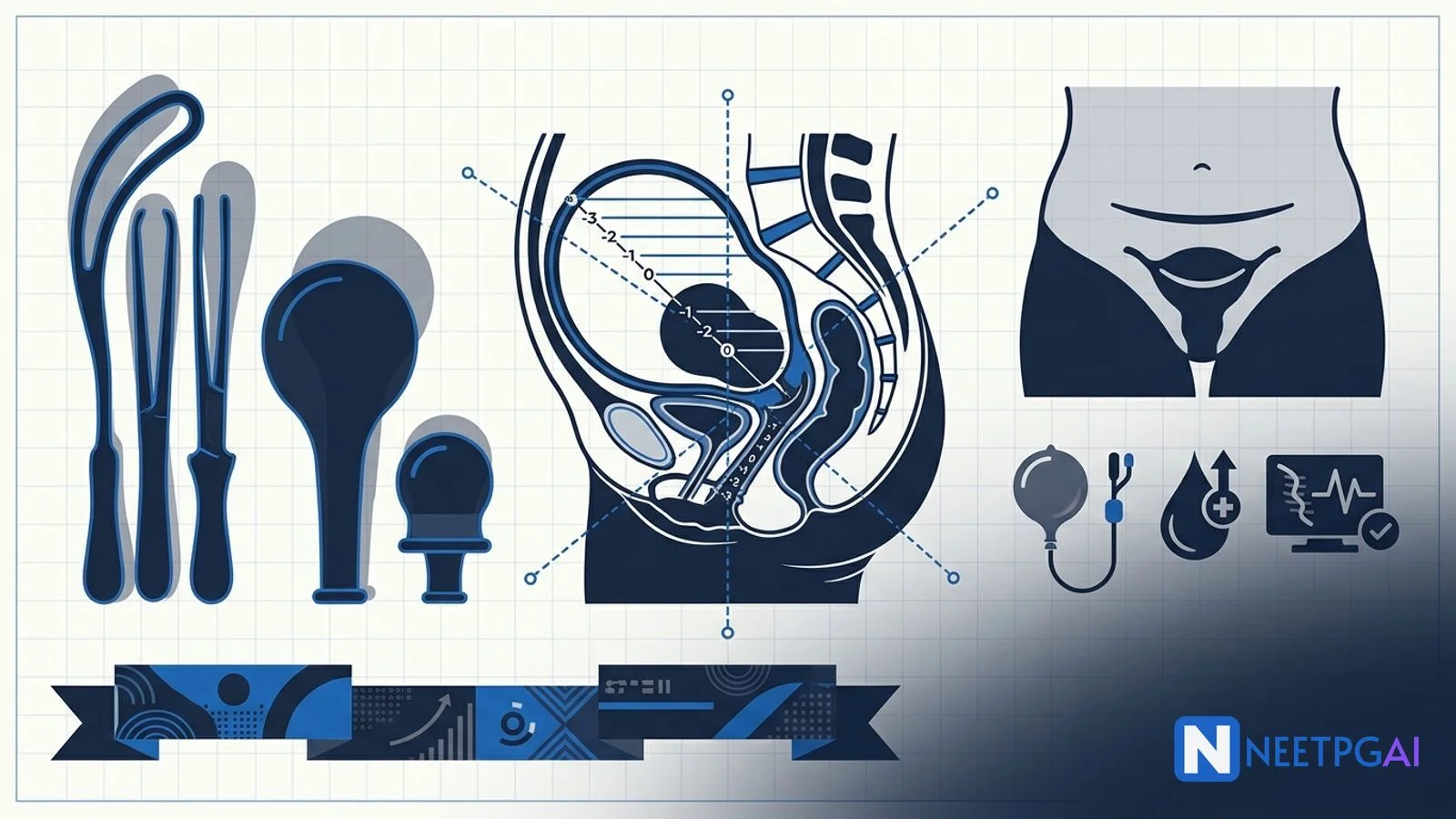
Master forceps, vacuum extraction, cesarean indications, VBAC criteria, ERAS pathway and India-specific LSCS trends for NEET PG 2027 OBG MCQs.
Read more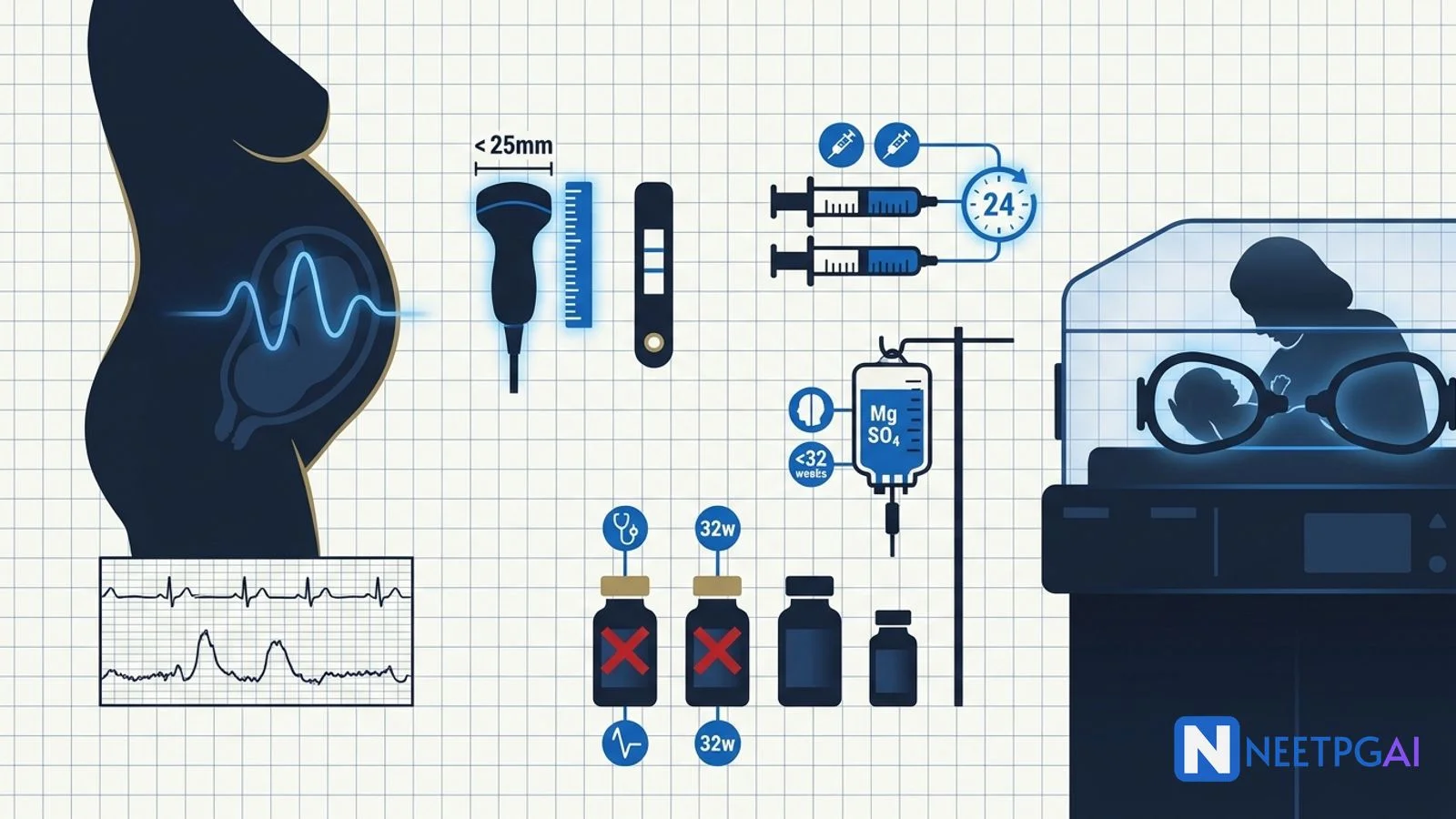
NEET PG clinical case on preterm labour and PPROM: 30-week G2P1 with regular contractions, cervical length 15 mm, positive fibronectin — latency antibiotics, betamethasone, MgSO4 neuroprotection, nifedipine tocolysis, NICU planning.
Read more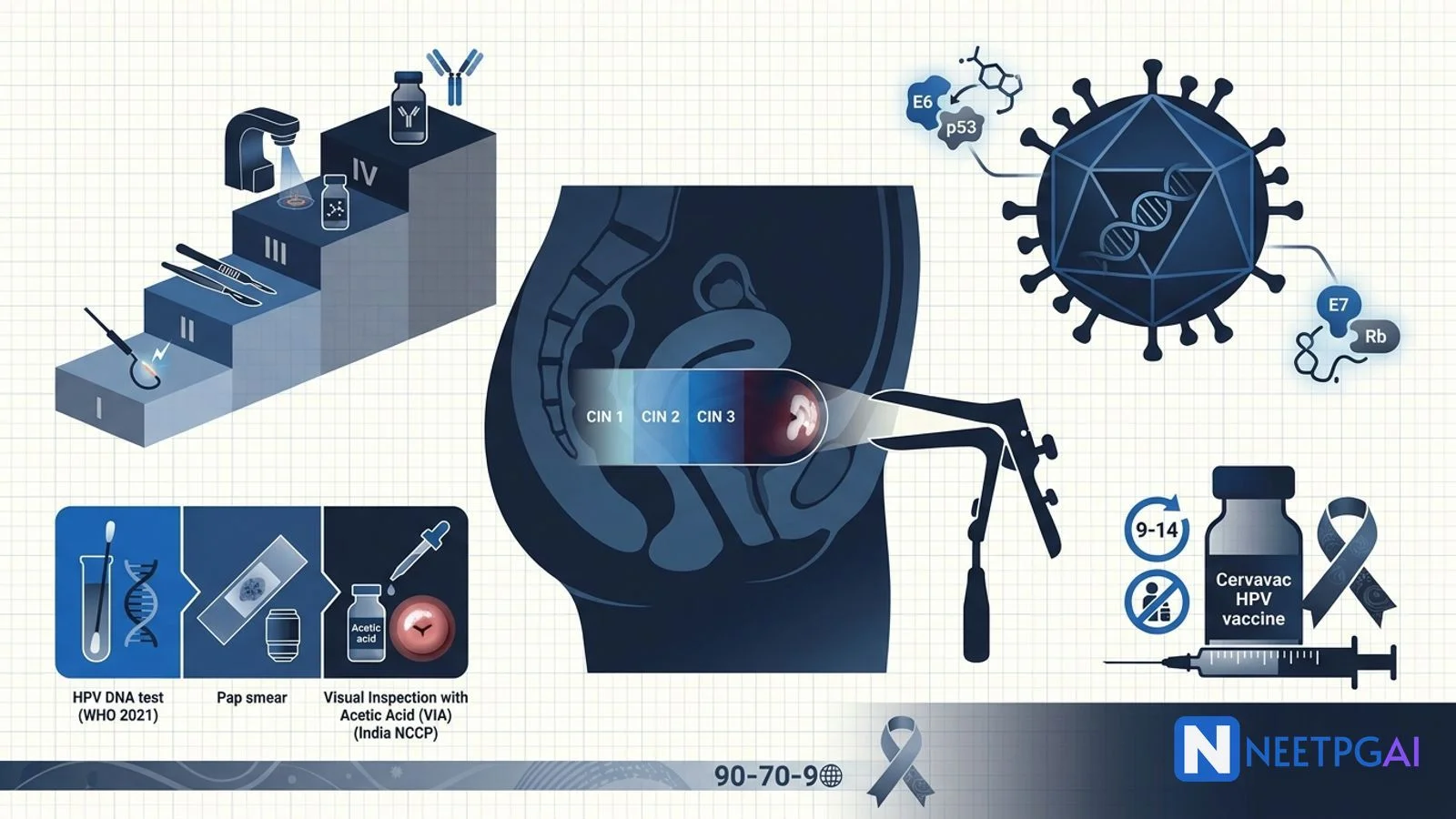
Master HPV natural history, VIA vs cytology, FIGO 2018 staging, Cervavac HPV vaccine and India NCCP context for NEET PG 2027 OBG MCQs.
Read moreTrained on standard textbooks (Harrison's, Robbins, KD Tripathi, BD Chaurasia, Bailey & Love). Drop your email for a one-tap link to your free account — the full 28,000+ MCQ bank, real previous-year questions, mock tests, revision and analytics, at no cost. The AI Tutor is part of Pro.
AI-first preparation built specifically for the NEET PG question pattern.
Every OBG MCQ comes with a detailed Claude-authored explanation citing standard references (Harrison's, Bailey & Love, Robbins, Park's etc.) — never a one-line answer key.
Wrong answers auto-schedule for review at expanding intervals (1d → 3d → 7d → 21d). Most aspirants need only half the practice volume to retain the same recall.
Every OBG question is generated against the NMC syllabus and validated against the last 5 years of NEET PG / INI-CET previous year questions.
Stuck on a tricky topic? Ask the AI Tutor anytime — it answers in seconds with diagrams, mnemonics, and clinical pearls tailored to NEET PG.
Ready to test yourself?
Test your OBG knowledge with AI-powered MCQs and detailed explanations — no signup required to try.
Common questions from NEET PG aspirants preparing OBG.
Sign up free and practice all 2284+ MCQs with AI-powered explanations tailored to your performance.
Create Free Account