
Free practice + topic-wise study material with AI explanations.
Build conceptual clarity. Focus on Pathology, Pharmacology, and PSM.
Quick answer
Orthopedics in NEET PG 2027 tests your ability to apply anatomical knowledge to trauma scenarios, interpret radiological descriptors, and recall classification systems with clinical precision. The subject spans 37 topics across 8 body systems — upper limb fractures, lower limb fractures, spine, joints, infections, tumours, congenital conditions, and metabolic bone disease. You are expected to know not just what a fracture is, but which nerve is at risk, which vessel is endangered, and what the first-line management step is.
The clinical intersection is direct. During your MBBS internship, you will encounter Colles fractures in post-menopausal women, Supracondylar fractures in children aged 5–10 years, and septic arthritis in neonates — all of which are NEET PG favourites. The exam frequently presents a clinical vignette with an X-ray description (e.g., "dinner fork deformity," "soap-bubble appearance in distal femur") and asks you to identify the diagnosis, the classification grade, or the immediate complication.
The syllabus shape is front-loaded with trauma. Fracture classification, fracture healing stages (inflammatory 0–5 days, soft callus 1–3 weeks, hard callus 3–12 weeks, remodelling up to 7 years), and open fracture management (Gustilo-Anderson Grade I–IIIC) together account for a disproportionate share of questions. Infections — osteomyelitis caused by Staphylococcus aureus and Pott disease with its characteristic anterior vertebral body destruction — are the second cluster. Degenerative and metabolic conditions (Osteoarthritis, Rickets, Paget disease) form the third.
A common misconception is that Orthopedics is purely a memorisation subject. In reality, NEET PG 2027 questions in this subject are increasingly clinical — a stem will describe a 35-year-old with a compound tibial fracture and purulent discharge and ask about the organism, the Cierny-Mader staging, or the antibiotic of choice. Another misconception is ignoring tumour radiology; Giant Cell Tumour (soap-bubble, epiphyseal, distal femur) and Osteosarcoma (sunburst pattern, Codman triangle) appear regularly and are easy marks if you have a visual anchor.
200 textbook-style one-liners auto-extracted from approved Orthopedics MCQ explanations. Drop your email and we'll send the PDF — no spam, you can reply to unsubscribe.
These 12 topics historically carry a disproportionate share of Orthopedics questions on NEET PG. Tap any to start practising — the Orthopedics filter is pre-selected for you.
Fractures — General
Fracture Classification — Types and Patterns
Start practising
Fractures — General
Fracture Healing — Stages
Start practising
Fractures — General
Open Fracture — Gustilo Classification
Start practising
Fractures — General
Complications of Fractures
Start practising
Upper Limb Fractures
Supracondylar Fracture of Humerus
Start practising
Upper Limb Fractures
Monteggia and Galeazzi Fractures
Start practising
Upper Limb Fractures
Colles and Smith Fractures
Start practising
Upper Limb Fractures
Scaphoid Fracture
Start practising
Lower Limb Fractures
Neck of Femur Fracture
Start practising
Spine
Tuberculosis of Spine — Pott Disease
Start practising
Joint Disorders
Osteoarthritis
Start practising
Joint Disorders
Septic Arthritis
Start practising
Five repeatable tactics that NEET PG toppers consistently use for Orthopedics. Below: a deeper play-by-play.
Build a strong foundation
Read each high-yield topic from one standard textbook before opening any question bank.
Practice in tight loops
After every chapter, attempt 20–30 topic-tagged MCQs while the concepts are still fresh.
Schedule spaced reviews
Push wrong answers into SM-2 review queues — short, frequent, expanding intervals beat marathon revisions.
Mine the last 5 years of PYQs
Map every PYQ to its parent topic. Recurring themes are louder signal than weightage tables.
Stress-test with mock tests
A subject-wise mock every fortnight surfaces blind spots before the real exam does.
Time budget
Primary textbook
Supplementary
Daily and weekly rhythm
High-yield topic drill — two you must nail
Mistakes to avoid
Revision rhythm
Put this into a 30-minute session today
We'll pre-select Orthopedics and serve a mixed difficulty set.
Regarding the biochemical abnormalities in vitamin D-deficient rickets, all of the following statements are true EXCEPT:
See the options, answer & explanation
The full question — answer choices, correct answer, and AI explanation — is free the moment you sign in.
6 in-depth Orthopedics guides curated for NEET PG aspirants.
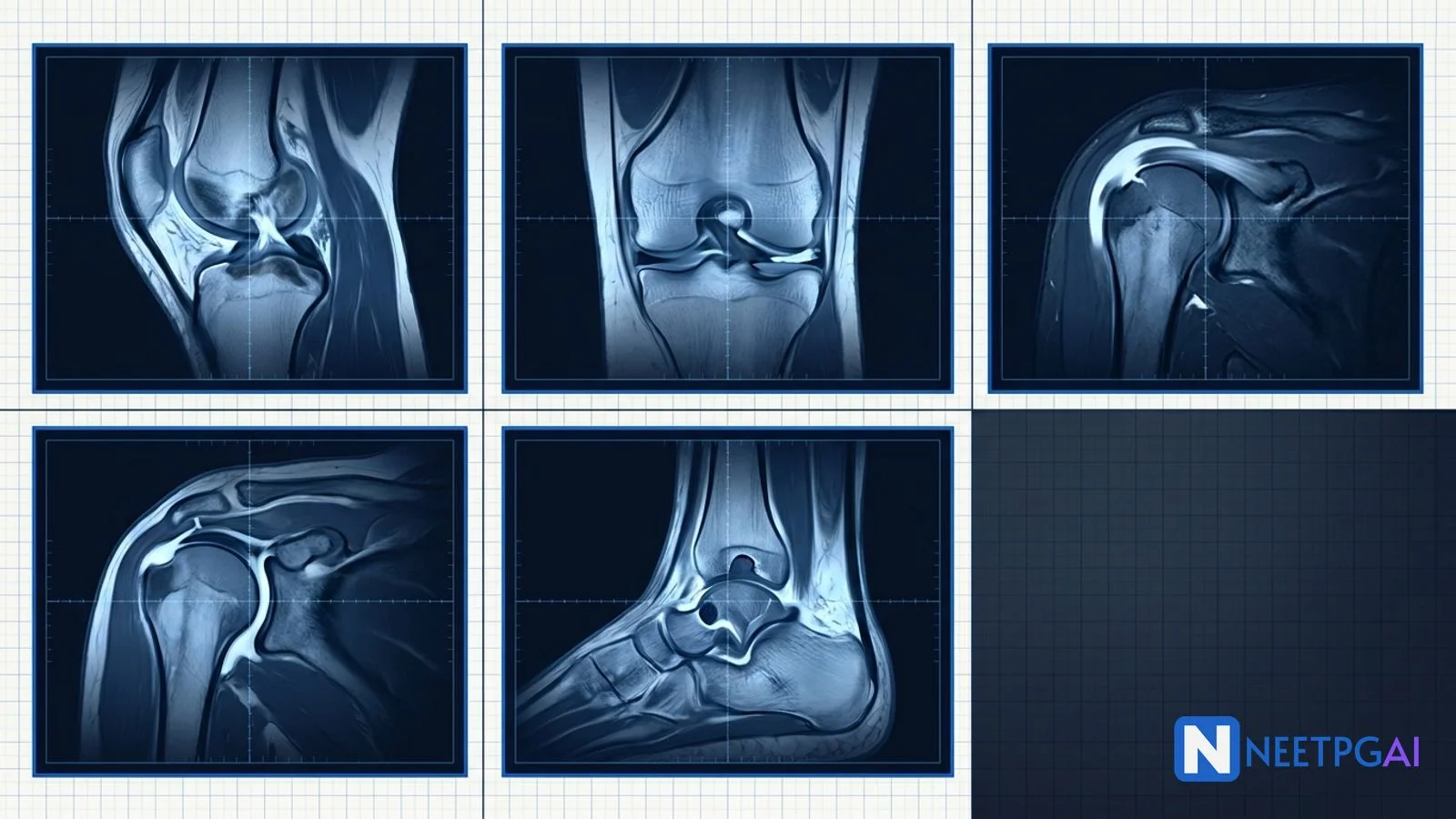
5 orthopedic MRI image MCQs for NEET PG: ACL tear with bone bruise pattern, bucket-handle meniscal tear with double-PCL sign, rotator cuff supraspinatus tear, SLAP labral tear, and talar osteochondral defect — surgical vs conservative.
Read more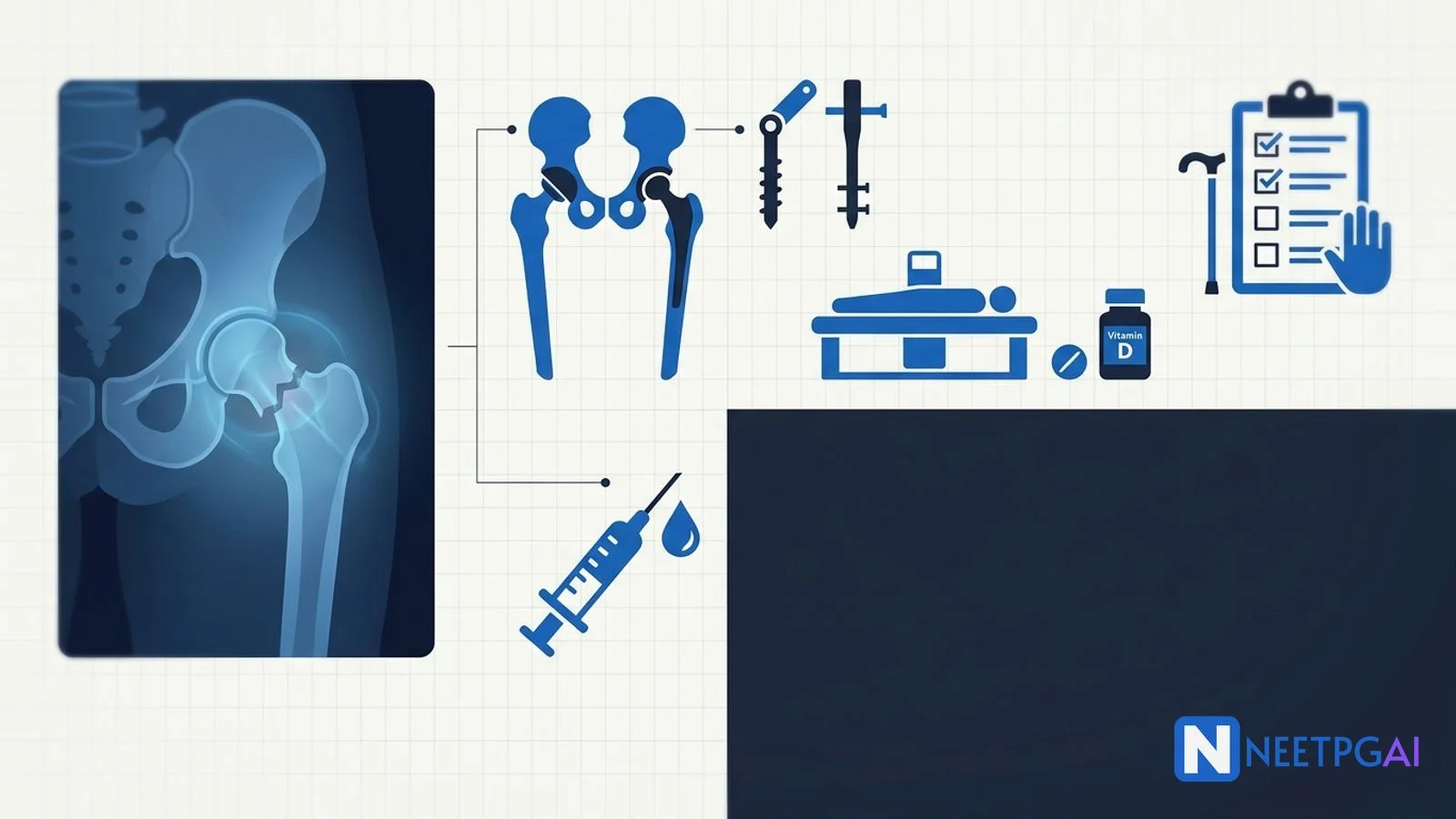
NEET PG clinical case on elderly hip fracture: 78-yo female, bathroom slip, shortened externally rotated leg, Garden IV intracapsular fracture — Garden classification, hemiarthroplasty vs THR, 48-h surgery target, osteoporosis workup.
Read more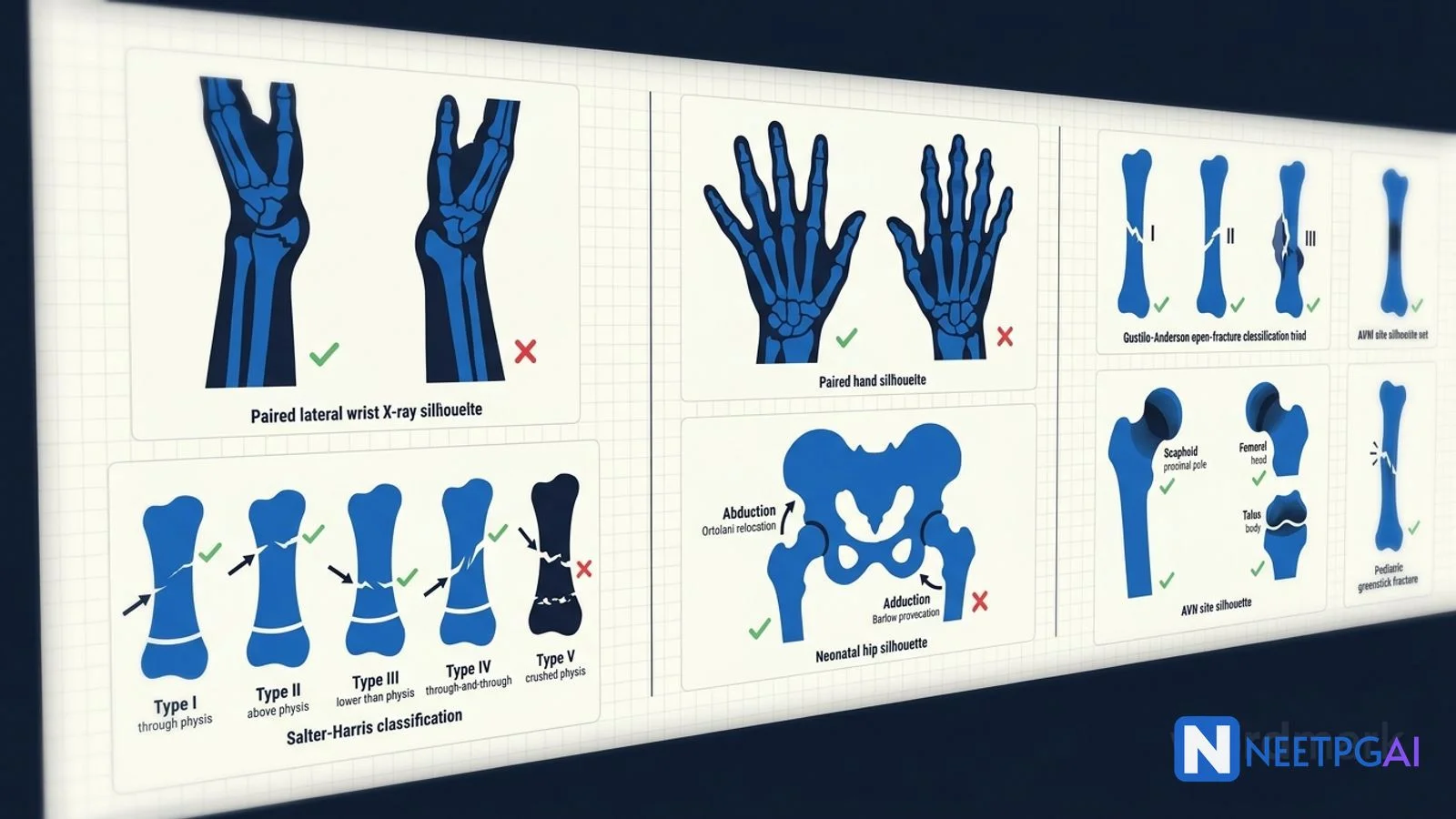
Avoid the costliest orthopedic mistakes in NEET PG 2027: Colles vs Smith, Salter-Harris, fracture healing, dislocations, RA vs OA, septic arthritis, compartment syndrome, AVN, DDH, Gustilo.
Read moreTrained on standard textbooks (Harrison's, Robbins, KD Tripathi, BD Chaurasia, Bailey & Love). Drop your email for a one-tap link to your free account — the full 28,000+ MCQ bank, real previous-year questions, mock tests, revision and analytics, at no cost. The AI Tutor is part of Pro.
AI-first preparation built specifically for the NEET PG question pattern.
Every Orthopedics MCQ comes with a detailed Claude-authored explanation citing standard references (Harrison's, Bailey & Love, Robbins, Park's etc.) — never a one-line answer key.
Wrong answers auto-schedule for review at expanding intervals (1d → 3d → 7d → 21d). Most aspirants need only half the practice volume to retain the same recall.
Every Orthopedics question is generated against the NMC syllabus and validated against the last 5 years of NEET PG / INI-CET previous year questions.
Stuck on a tricky topic? Ask the AI Tutor anytime — it answers in seconds with diagrams, mnemonics, and clinical pearls tailored to NEET PG.
Ready to test yourself?
Test your Orthopedics knowledge with AI-powered MCQs and detailed explanations — no signup required to try.
Common questions from NEET PG aspirants preparing Orthopedics.
Sign up free and practice all 1232+ MCQs with AI-powered explanations tailored to your performance.
Create Free Account