Version 1.0 — Published October 2026
Quick Answer
Three Indian forensic emergencies dominate NEET PG and INI-CET toxicology — organophosphate (SLUDGE/DUMBBELS, atropine + PAM, intermediate syndrome at 24-96h, garlic smell), aluminium phosphide (celphos, phosphine gas, cardiogenic shock, no antidote, silver nitrate test positive), and datura (anticholinergic toxidrome — hot/red/dry/blind/mad, physostigmine antidote, kidney-shaped seeds in stomach). Mechanism, antidote, autopsy for each.
Why This Matters for NEET PG & INI-CET
Three substances — organophosphates, aluminium phosphide, and datura — account for 60-70 percent of acute oral poisoning admissions in rural and semi-urban India and 90 percent of the Forensic Medicine toxicology MCQs across the last 10 cycles of NEET PG, INI-CET and FMGE. OP compounds are the single largest cause of suicidal poisoning death in Indian agricultural populations. AlP (celphos) is the single most lethal common adult oral poison in Indian emergency practice. Datura is the archetypal Indian homicidal and 'thug' poisoning agent. Together they test mechanism (basic pharmacology), clinical features (toxidromes), antidotes (therapeutics), and autopsy signatures (forensic pathology) — four blueprint domains in one MCQ cluster.
INI-CET's Forensic Medicine section typically carries 4-6 questions, of which 2-3 are toxicology. NEET PG's forensic weighting is 4-6 questions per paper. Both exams repeatedly test the same core facts: atropine end-points (clear chest, not pupil size), PAM mechanism and timing, intermediate syndrome at 24-96 hours, phosphine mechanism (cytochrome c oxidase inhibition), silver nitrate test, anticholinergic toxidrome mnemonic, physostigmine indications and contraindications.
Organophosphate Poisoning
Agents: malathion, parathion, chlorpyrifos, dichlorvos, diazinon, dimethoate, monocrotophos.
Mechanism: covalent irreversible inhibition of acetylcholinesterase at muscarinic + nicotinic receptors + CNS; also inhibits plasma butyrylcholinesterase.
Clinical features — three phases:
| Phase | Timing | Receptors | Features |
|---|
| 1. Muscarinic | 30-60 min | M1-M5 | SLUDGE / DUMBBELS, miosis, bronchorrhoea |
| 2. Nicotinic | 1-6 h | Nm, Nn | Fasciculations, weakness, tachycardia, HTN |
| 3. CNS | 1-6 h | Central | Agitation, seizures, coma, resp depression |
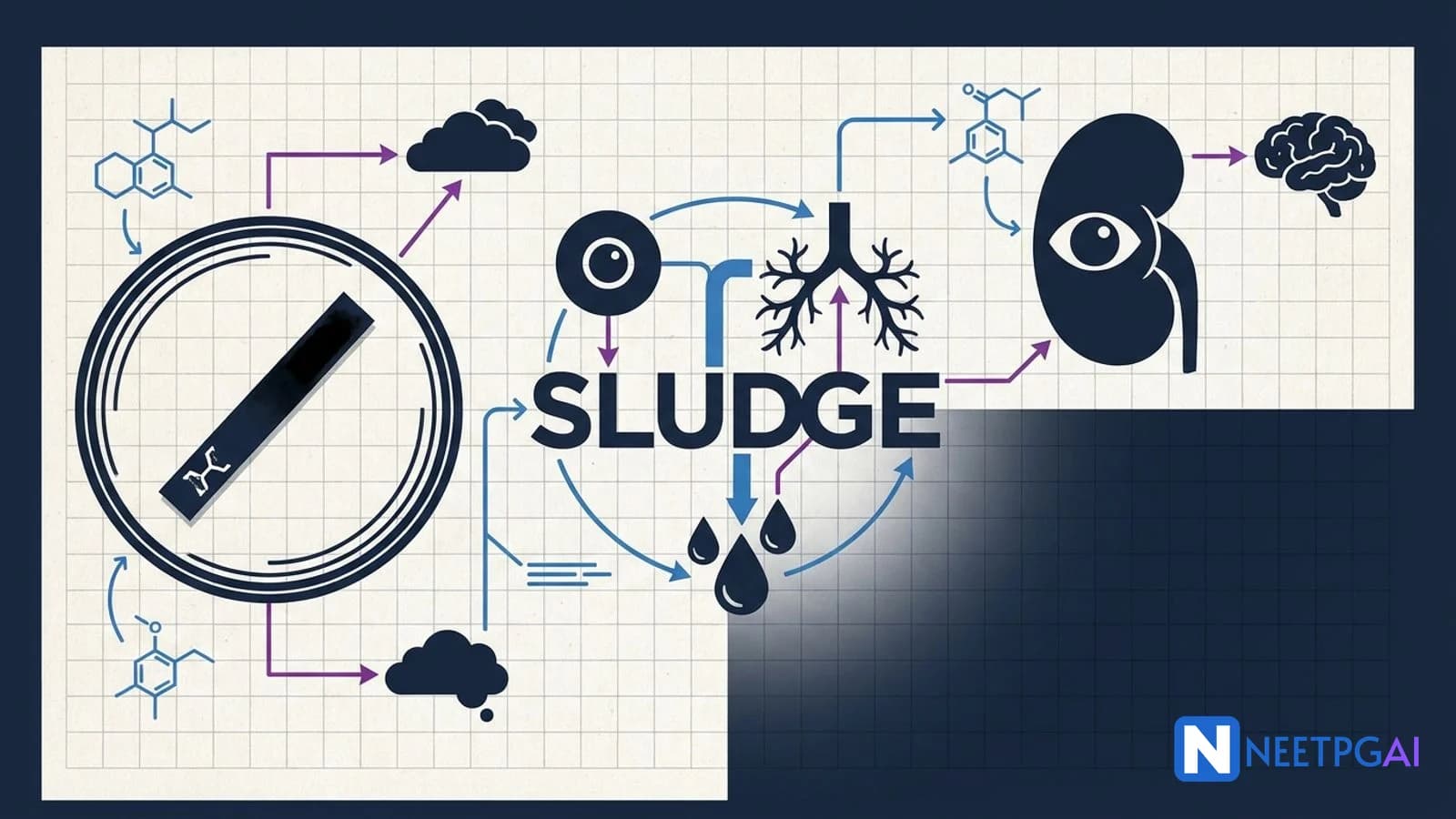
SLUDGE — Salivation, Lacrimation, Urination, Defecation, GI distress, Emesis.
DUMBBELS — Diarrhoea, Urination, Miosis, Bradycardia, Bronchospasm, Bronchorrhoea, Emesis, Lacrimation, Salivation.
Pathognomonic bedside sign: pinpoint pupils + copious airway secretions + garlic or kerosene smell on breath.
Diagnosis: clinical + red cell AChE and plasma BuChE below 50 percent of normal.
Intermediate syndrome (24-96 hours after apparent recovery): proximal muscle, neck flexor, cranial nerve, respiratory muscle paralysis without fasciculations; needs prolonged ventilation; 30-40 percent mortality.
OPIDN (OP-Induced Delayed Neuropathy): 2-3 weeks post-exposure, distal motor neuropathy, inhibits neuropathy target esterase (NTE), not reversed by PAM, chronic weakness.
Atropine + PAM Protocol
Atropine — muscarinic antidote (no action on nicotinic or CNS):
- Loading: 1-3 mg IV bolus, double every 5 min if endpoints not met
- Children: 0.05 mg/kg
- Endpoints (four C's):
- Clear chest (no bronchorrhoea or wheeze) — most important
- Heart rate greater than 80 bpm
- SBP greater than 80 mmHg
- Dry axillae
- Pupils size is NOT an endpoint — ignore miosis
- Maintenance: 10-20 percent of total loading dose per hour
- Total 24-72 h: 500-2000 mg in severe cases
Pralidoxime (2-PAM) — nicotinic + AChE regenerator:
- Dose: 1-2 g IV over 15-30 min (25-50 mg/kg in children)
- Infusion: 500 mg/hr for at least 48-72 h
- Must start within 24-48 h before 'ageing' (covalent bond becomes permanent)
- Reverses nicotinic weakness; does NOT reverse muscarinic effects
Diazepam — seizures and CNS calming: 5-10 mg IV, repeat as needed.
Intubation: use rocuronium, NOT succinylcholine. Sux is cholinesterase-metabolised and will produce prolonged paralysis.
Decontamination: remove contaminated clothes, wash skin with soap and water, gastric lavage within 1 h, activated charcoal within 1 h.
Autopsy
- Garlic or kerosene odour on body, clothes, gastric contents
- Pupils constricted (miosis)
- Pulmonary oedema with frothy pink secretions
- Pancreatitis (acute oedematous or haemorrhagic)
- Congestion of brain, lungs, liver, kidneys
- GC-MS confirms specific OP compound
- Reduced plasma BuChE
Aluminium Phosphide (Celphos) Poisoning
Agent: aluminium phosphide tablets (3 g each, grey-white), sold as grain fumigant in rural India. Brand names Celphos, Quickphos, Alphos, Phostoxin.
Mechanism: on contact with gastric HCl or moisture, releases phosphine gas (PH3). Phosphine irreversibly inhibits cytochrome c oxidase (complex IV of electron transport chain), halting oxidative phosphorylation. Most oxidative-dependent tissues fail first — heart, brain, kidney.
Clinical features (30 min to 2 h):
- Epigastric pain, vomiting, metallic garlic taste
- Refractory cardiogenic shock (hallmark)
- Severe metabolic acidosis (lactate 10-20 mmol/L, pH less than 7.0)
- Arrhythmias — sinus tachy → AV block → VT/VF
- ARDS within 24 h
- Acute hepatitis within 24 h
- AKI
- Death often within 24-72 h
Mortality: 50-80 percent — the single highest for common adult oral poison in India.
Antidote: NONE. Management is purely supportive.
Management:
- IV crystalloid resuscitation (cautious — risk of pulmonary oedema)
- Noradrenaline or vasopressin infusion for refractory shock
- Sodium bicarbonate for pH less than 7.1
- Intubation and ventilation
- Dialysis for AKI (not for phosphine itself — not dialysable)
- GI decontamination with coconut oil, mustard oil or liquid paraffin — anecdotal
- Magnesium sulphate 1 g IV loading then 1-1.5 g/hr for 24 h — anecdotal benefit
- Investigational: trimetazidine, N-acetylcysteine, glutathione, intra-aortic balloon pump, ECMO
- NO atropine, NO PAM, NO physostigmine — these do nothing
Autopsy
- Silver nitrate test POSITIVE — strip held over opened stomach contents in closed container turns black within minutes (silver + phosphine → silver phosphide)
- Garlic odour on gastric contents
- Gastric mucosal congestion, erosion, autodigestion of gastric wall
- Pulmonary oedema and ARDS
- Acute tubular necrosis of kidney
- Centrilobular hepatic necrosis
- Right-sided cardiac dilation
- Myocardial oedema
Legal context: AlP poisoning is almost always suicidal in India. Routine medico-legal case.
Datura (Dhatura) Poisoning
Agents: Datura stramonium (jimsonweed, thorn apple), Datura metel, Belladonna (Atropa belladonna), Henbane (Hyoscyamus niger), Mandrake, Brugmansia. All Solanaceae containing tropane alkaloids — atropine, hyoscyamine, scopolamine.
Mechanism: competitive antagonism at muscarinic ACh receptors M1-M5.
Clinical features (30-60 min, lasting 12-48 h — long half-life):
The anticholinergic toxidrome mnemonic:
| Mnemonic | Mechanism |
|---|
| Hot as a hare | Hyperthermia (loss of sweating) |
| Red as a beet | Cutaneous vasodilation, flushed |
| Dry as a bone | Dry skin, dry mouth, dry mucous membranes |
| Blind as a bat | Mydriasis, cycloplegia, blurred vision |
| Mad as a hatter | Agitation, delirium, visual hallucinations (classically insects, small animals), confabulation |
| Full as a flask | Urinary retention (loss of bladder tone) |
| Fast as a bloodhound | Tachycardia (loss of vagal tone) |
Pathognomonic: mydriasis + flushed dry skin + delirium.
Classic forensic context: 'thug poisoning' — railway thieves offer sweets, pakodas or tea laced with dhatura seeds to fellow passengers for drug-and-rob robbery. Also dowry homicide. Also unintentional ingestion (children, confused with other plants).
Diagnosis: clinical. Serum/urine HPLC-MS confirms tropane alkaloids.
Antidote: physostigmine 0.5-2 mg slow IV over 5 min, repeat every 10-20 min:
- Tertiary amine, CNS-penetrating acetylcholinesterase inhibitor
- Reverses both central and peripheral anticholinergic effects
- Reserved for severe cases: unmanageable agitation, seizures, arrhythmias, respiratory compromise
- Contraindications: TCA overdose (QRS widening), bronchospasm, mechanical bowel obstruction
- Risks: bradycardia, asystole, seizures (own effect at high dose)
Supportive:
- External cooling + IV fluids
- Benzodiazepines (diazepam 5-10 mg IV) for agitation and seizures
- Physical restraint if needed
- Bladder catheterisation for retention
- Cardiac monitoring
- Activated charcoal within 1-2 h of ingestion
Autopsy
- Non-specific
- Dilated pupils (if death during toxidrome)
- Dry skin and mucous membranes
- Kidney-shaped dhatura seeds in stomach — 3-4 mm, flat, dark brown — pathognomonic if present
- HPLC-MS of blood/urine/gastric for tropane alkaloids
Comparison Table — Three Toxicology Emergencies
| Feature | OP | AlP | Datura |
|---|
| Agent | Malathion, chlorpyrifos | Celphos tablet | Dhatura seeds |
| Mechanism | AChE inhibition | Cyt-c oxidase inhibition | Muscarinic ACh antagonism |
| Pupils | Miotic (pinpoint) | Normal / dilated | Mydriatic (dilated fixed) |
| Secretions | Copious (SLUDGE) | None | Dry |
| Shock | Rare | Refractory cardiogenic | Rare |
| Acidosis | Mild | Severe (pH less than 7) | None |
| Antidote | Atropine + PAM | NONE | Physostigmine |
| Mortality | 10-20% | 50-80% | less than 5% |
| Suicidal/homicidal | Suicidal | Suicidal | Homicidal |
| Autopsy pearl | Garlic + miosis + pulm oedema | Silver nitrate test + | Kidney-shaped seeds |
| Specific test | BuChE below 50% | Silver nitrate black | HPLC-MS tropane |
High-Yield One-Liners
- OP mechanism = irreversible AChE inhibition, muscarinic + nicotinic + CNS.
- SLUDGE and DUMBBELS cover muscarinic effects; nicotinic adds fasciculations and weakness.
- Pathognomonic OP sign = pinpoint pupils + bronchorrhoea + garlic smell.
- Atropine endpoints = clear chest, HR greater than 80, SBP greater than 80, dry axillae. Not pupil size.
- Pralidoxime 1-2 g IV loading + 500 mg/hr infusion; useless after enzyme 'ageing' (24-48h).
- Intermediate syndrome = 24-96h, proximal + resp muscle weakness, needs ventilation, 30-40% mortality.
- OPIDN = 2-3 weeks post-exposure, distal neuropathy, NTE inhibition, not PAM-reversible.
- Use rocuronium NOT succinylcholine in OP intubation (sux is cholinesterase-dependent).
- AlP releases phosphine gas on gastric acid contact.
- Phosphine inhibits complex IV cytochrome c oxidase.
- AlP mortality 50-80 percent, NO antidote.
- Silver nitrate strip over gastric contents turns black = phosphine positive.
- Magnesium sulphate IV has anecdotal benefit in AlP.
- Dhatura = anticholinergic toxidrome = hot/red/dry/blind/mad.
- Physostigmine is the antidote for severe anticholinergic; CI in TCA overdose.
- Dhatura seeds are kidney-shaped, 3-4 mm, dark brown, pathognomonic in stomach.
Common Mistakes
- Using pupil size as atropine endpoint in OP — pupils remain miotic for hours despite adequate atropinisation. The correct endpoint is clear chest + heart rate + BP + dry axillae.
- Giving PAM late after 48 hours — enzyme ageing makes AChE regeneration impossible. Start PAM within 24 hours or do not bother.
- Giving atropine or PAM in AlP — neither works. AlP has no antidote; management is supportive only.
- Giving physostigmine to a TCA overdose patient confused with anticholinergic toxidrome — can precipitate asystole or seizures. Check ECG for QRS widening first.
- Confusing OP garlic smell with AlP garlic smell — both have garlic odour but mechanism and management are opposite. Pupils (miotic in OP, normal/dilated in AlP), secretions (copious in OP, none in AlP), shock (rare in OP, refractory in AlP) distinguish.
Related Topics on NEETPGAI
Practice This on NEETPGAI
Three substances, four domains, 4-6 marks per paper. NEETPGAI's Forensic Medicine bank carries over 1,200 MCQs tagged by substance class with explanation diagrams and AI Deep-Dive discussion for every stem. Free for every registered user. Sign up free and run a 20-Q Toxicology emergencies block tonight.