
Free practice + topic-wise study material with AI explanations.
Build conceptual clarity. Focus on Pathology, Pharmacology, and PSM.
Quick answer
Biochemistry in NEET PG 2027 is not a memory subject — it is a reasoning subject dressed in molecular language. The 48 syllabus topics spread across 10 body systems test your ability to trace a metabolic block upstream and downstream, predict the lab finding, and match it to a clinical presentation. A question about a 3-day-old with hyperammonaemia (NH3 > 380 μmol/L) and low citrulline is not asking you to recall a definition; it is asking you to run the Urea Cycle forward in your head and identify the deficient enzyme by the pattern of accumulated and depleted intermediates.
Biochemistry intersects directly with Paediatrics (inborn errors of metabolism — PKU, MSUD, OTC deficiency), Internal Medicine (lactic acidosis, diabetic ketoacidosis, statin pharmacology), and Haematology (G6PD deficiency, Pyruvate Kinase deficiency). The Electron Transport Chain and Oxidative Phosphorylation Uncouplers topic connects to toxicology (cyanide poisoning blocks Complex IV; 2,4-DNP uncouples ATP synthesis). These cross-subject links are exactly where NEET PG 2027 setters place their hardest distractors.
Of the 48 topics, roughly 60% of marks historically come from 12 high-yield areas. Metabolism of carbohydrates (Glycolysis, TCA Cycle, Gluconeogenesis, Pentose Phosphate Pathway, Cori Cycle) forms the single largest cluster — expect 5-6 questions from this cluster alone. Lipid metabolism (Fatty Acid Oxidation, Cholesterol Synthesis and HMG-CoA Reductase regulation) and enzyme kinetics (Michaelis-Menten, competitive vs. non-competitive inhibition) together contribute another 4-5 questions. Molecular biology topics — blotting techniques, PCR, restriction enzymes — appear as 1-2 questions and are best handled through a single focused revision rather than repeated deep study.
Many aspirants treat Biochemistry as a subject to finish once during the MBBS internship year and never revisit. That approach fails because NEET PG 2027 questions are scenario-based: you need to recall that the Cori Cycle shuttles lactate from muscle to liver for gluconeogenesis, and simultaneously know that this cycle is disrupted in severe liver disease. A second misconception is over-investing in molecular biology (Southern, Northern, Western blotting) at the expense of metabolic pathways — the marks ratio does not justify that trade-off. Prioritise pathways first, molecular biology second.
200 textbook-style one-liners auto-extracted from approved Biochemistry MCQ explanations. Drop your email and we'll send the PDF — no spam, you can reply to unsubscribe.
These 12 topics historically carry a disproportionate share of Biochemistry questions on NEET PG. Tap any to start practising — the Biochemistry filter is pre-selected for you.
Carbohydrate Metabolism
Glycolysis
Start practising
Carbohydrate Metabolism
TCA Cycle
Start practising
Carbohydrate Metabolism
Gluconeogenesis
Start practising
Carbohydrate Metabolism
Pentose Phosphate Pathway
Start practising
Carbohydrate Metabolism
Lactate Metabolism and Cori Cycle
Start practising
Carbohydrate Metabolism
Glycolytic Enzyme Regulation and Deficiencies
Start practising
Energetics and Bioenergetics
Electron Transport Chain
Start practising
Energetics and Bioenergetics
Oxidative Phosphorylation Uncouplers
Start practising
Energetics and Bioenergetics
Enzyme Kinetics — Michaelis-Menten
Start practising
Energetics and Bioenergetics
Enzyme Inhibition Types
Start practising
Lipid Metabolism
Fatty Acid Oxidation
Start practising
Lipid Metabolism
Cholesterol Synthesis and Regulation
Start practising
Five repeatable tactics that NEET PG toppers consistently use for Biochemistry. Below: a deeper play-by-play.
Build a strong foundation
Read each high-yield topic from one standard textbook before opening any question bank.
Practice in tight loops
After every chapter, attempt 20–30 topic-tagged MCQs while the concepts are still fresh.
Schedule spaced reviews
Push wrong answers into SM-2 review queues — short, frequent, expanding intervals beat marathon revisions.
Mine the last 5 years of PYQs
Map every PYQ to its parent topic. Recurring themes are louder signal than weightage tables.
Stress-test with mock tests
A subject-wise mock every fortnight surfaces blind spots before the real exam does.
Put this into a 30-minute session today
We'll pre-select Biochemistry and serve a mixed difficulty set.
A patient presented with symptoms of peripheral neuropathy and macrocytic anemia. She was given folate 5mg and the blood picture improved. However, the neurologic manifestations were aggravated. What is the most likely cause?
See the options, answer & explanation
The full question — answer choices, correct answer, and AI explanation — is free the moment you sign in.
6 in-depth Biochemistry guides curated for NEET PG aspirants.
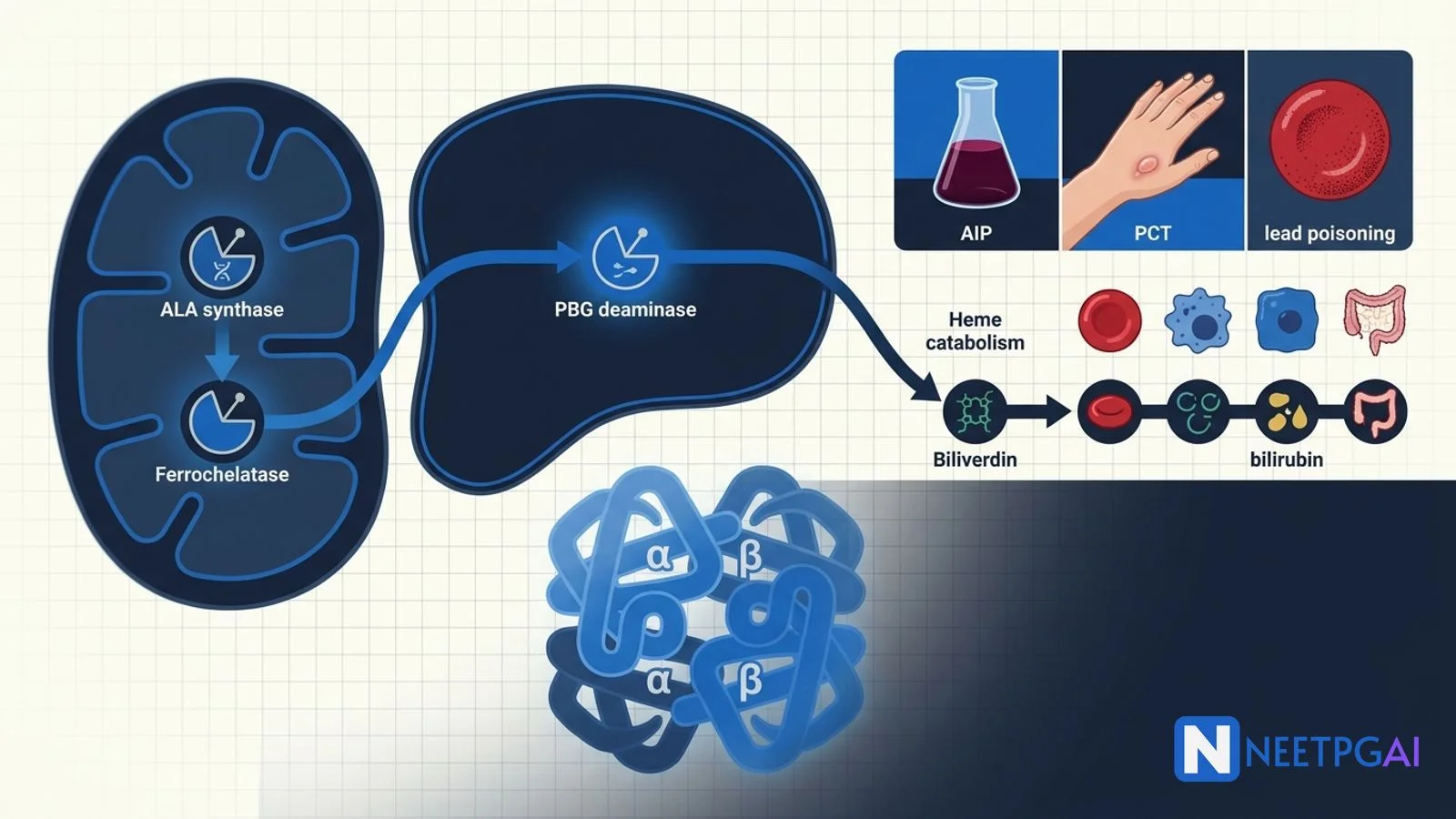
Master hemoglobin, heme synthesis, porphyrias, bilirubin, lead poisoning, and sideroblastic anemia for NEET PG 2027 Biochemistry MCQs with India-specific context.
Read more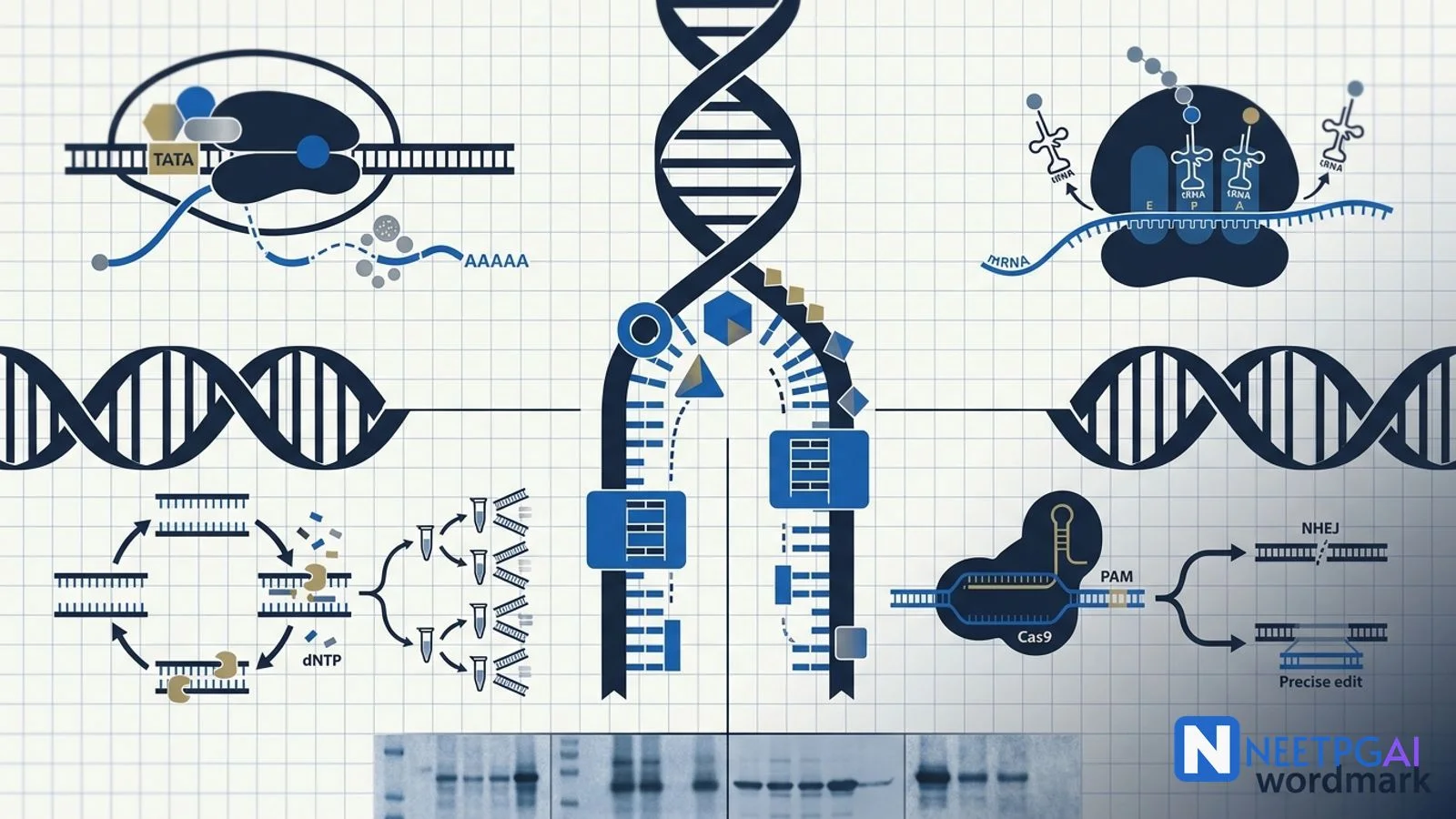
Master DNA replication, transcription, translation, PCR, sequencing, blotting and CRISPR-Cas9 mechanisms for NEET PG 2027 biochemistry and molecular biology MCQs.
Read more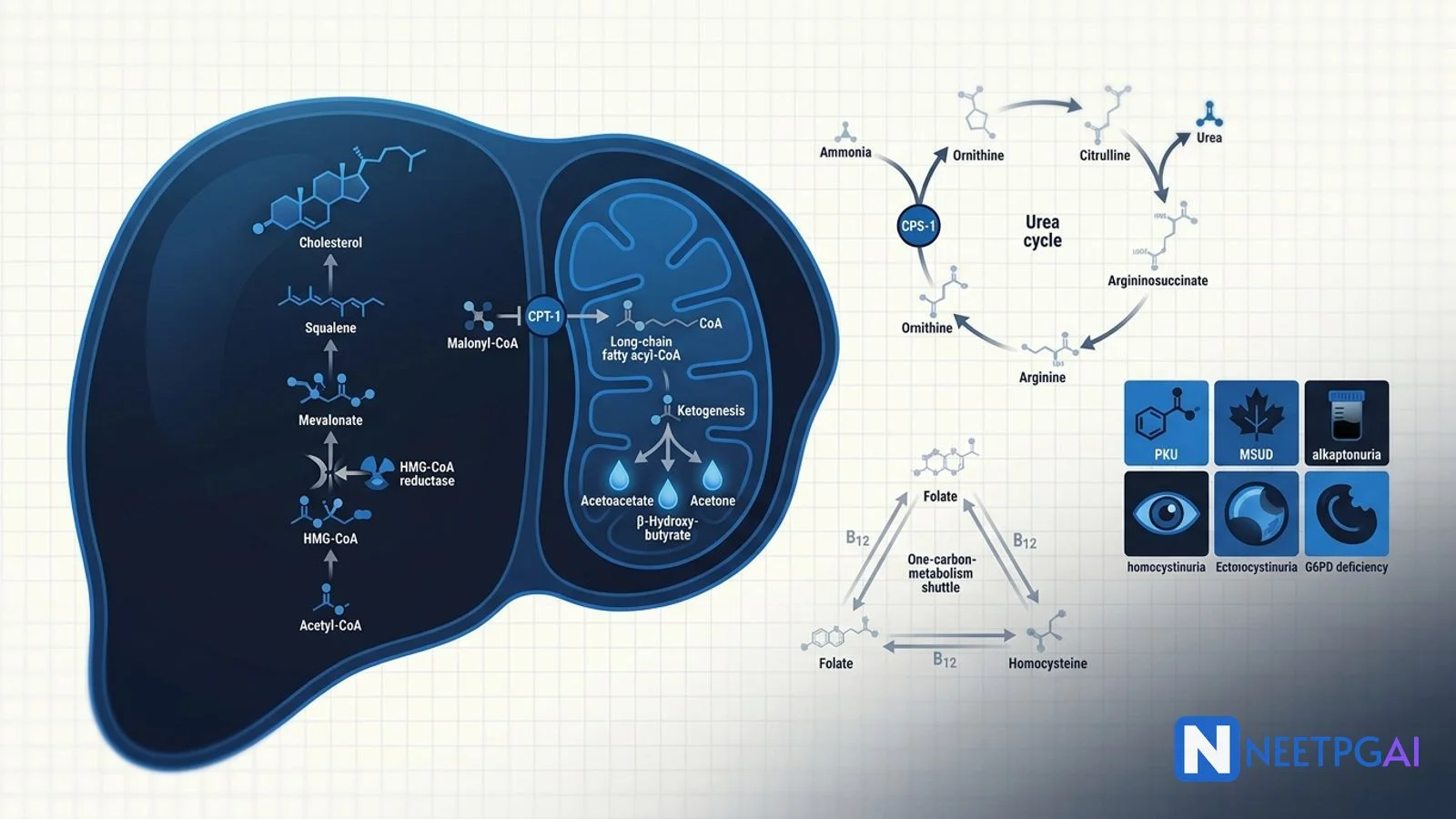
Master cholesterol, beta-oxidation, ketogenesis, urea cycle, transamination, PKU, MSUD, homocystinuria, G6PD and one-carbon metabolism for NEET PG 2027.
Read moreTrained on standard textbooks (Harrison's, Robbins, KD Tripathi, BD Chaurasia, Bailey & Love). Drop your email for a one-tap link to your free account — the full 28,000+ MCQ bank, real previous-year questions, mock tests, revision and analytics, at no cost. The AI Tutor is part of Pro.
AI-first preparation built specifically for the NEET PG question pattern.
Every Biochemistry MCQ comes with a detailed Claude-authored explanation citing standard references (Harrison's, Bailey & Love, Robbins, Park's etc.) — never a one-line answer key.
Wrong answers auto-schedule for review at expanding intervals (1d → 3d → 7d → 21d). Most aspirants need only half the practice volume to retain the same recall.
Every Biochemistry question is generated against the NMC syllabus and validated against the last 5 years of NEET PG / INI-CET previous year questions.
Stuck on a tricky topic? Ask the AI Tutor anytime — it answers in seconds with diagrams, mnemonics, and clinical pearls tailored to NEET PG.
Ready to test yourself?
Test your Biochemistry knowledge with AI-powered MCQs and detailed explanations — no signup required to try.
Common questions from NEET PG aspirants preparing Biochemistry.
Sign up free and practice all 1180+ MCQs with AI-powered explanations tailored to your performance.
Create Free Account